Mold Removal in Lake Alfred, FL
Lake Alfred is a small city between Auburndale and Haines City, built around Lake Alfred and Lake Haines on US 17, with a core of 1920s citrus-era houses and the state's citrus research station on its edge since 1917. The newer streets are 1970s and 1980s block ranches and a few 2010s subdivisions.
The old houses here are frame on piers, with plaster walls and crawl spaces open to lake air, and bathrooms that were added later. The ranches are block on slab with hall-closet air handlers. Both sit near lakes whose levels rise for weeks after a wet September.
A Lake Alfred call on this line goes to an independent local mold provider. That provider meters the house and writes the scope.
Lake Alfred also sits on the shoulder of the Lake Wales Ridge, so some streets drain quickly down sand slopes while the lakefront streets hold water. A house at the bottom of one of those slopes collects runoff from the whole block in a storm like Ian, and the slab or the crawl space takes the brunt of it for the following week.
Lake Alfred mold removal, in the citrus-era frame houses
A smell that comes up through the floor of a pier house is mold odor removal. Spots on a bathroom ceiling with no fan is bathroom mold removal. Growth on roof decking after a storm is attic mold remediation.
The city permit desk on US 17
Permits for a rebuild inside the city run through the City of Lake Alfred, a small office that is worth a call before the crew schedules the drywall.
Call (863) 375-7712 and tell us what you see. An independent mold provider serving Lake Alfred takes it from there.
Services Available in Lake Alfred
Mold Removal
Growth on drywall behind a leaking supply line, a window that took wind-driven rain, or a wet slab edge: room sealed, wet board cut to the meter line, framing cleaned and dried.
Black Mold Removal
A dark patch on a wall or ceiling handled by how far the water went, not its color: containment, porous material out, block and framing cleaned, leak fixed before closing.
Whole-Home Mold Remediation
A house that sat wet after Milton, Ian, or a burst line while you were away, mapped room by room and cleared in zones as one project.
HVAC Mold Cleaning
Coil, drain pan, and condensate line cleaned or replaced when the air handler in a Lakeland closet or garage sweats through a nine-month cooling season.
Bathroom Mold Removal
Growth behind a vanity, under a shower pan, or on a bungalow bathroom ceiling with no fan, removed with the leak or the venting fixed first.
Attic Mold Remediation
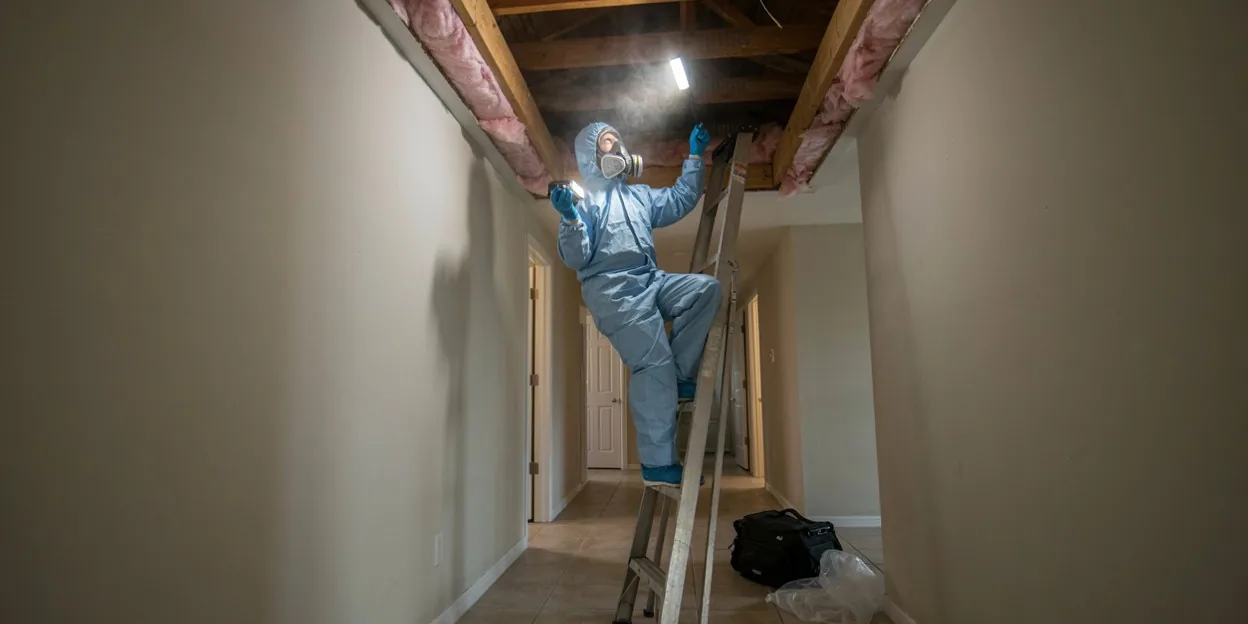
Growth on roof decking under lifted shingles or around a sweating duct, cleaned and treated once the roof and the insulation are dealt with.
Mold Odor Removal
A musty smell in a house that looks fine, traced to the wet material under the floor or behind the cabinet, then removed and treated.
Mold Damage Repair
Drywall, baseboard, cabinet bottoms, and ceiling put back after removal, once the slab and framing read dry and the water source is repaired.