Mold Removal in Auburndale, FL
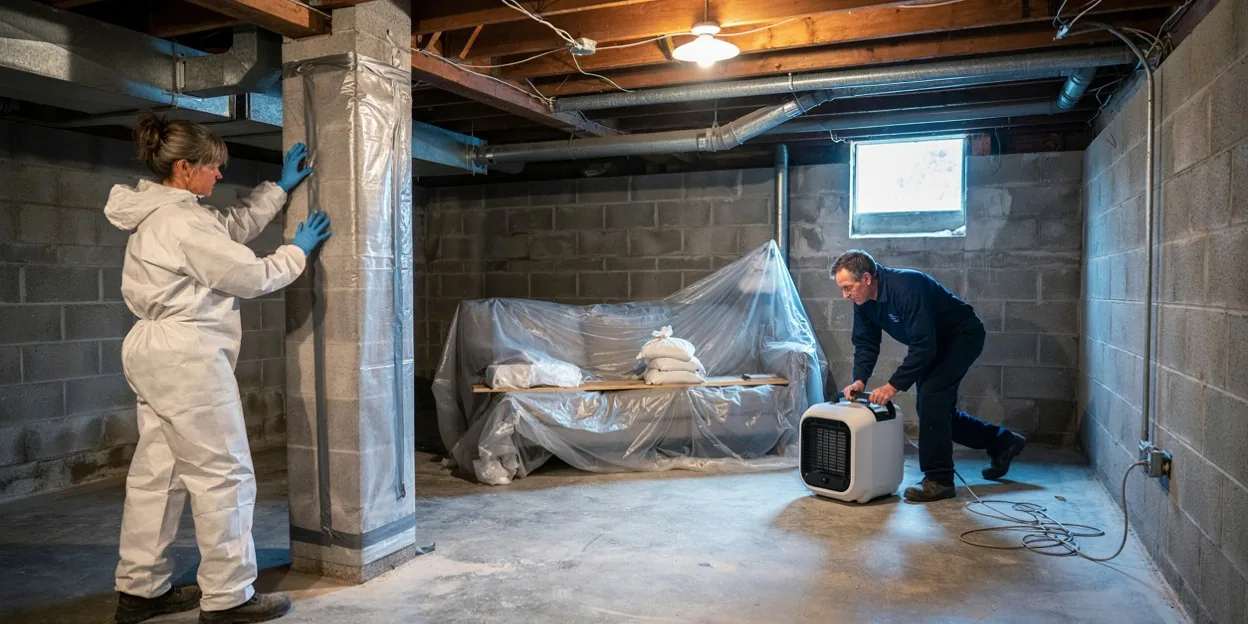
Auburndale sits between Lakeland and Winter Haven on the old rail line, a town of about 22,000 wrapped around Lake Ariana, Lake Stella, and a dozen smaller lakes. The core is 1920s and 1950s houses near downtown and the lakes; the growth since the 1990s has run north toward I-4 and the Polk Parkway in block-and-stucco subdivisions on former citrus land.
The citrus land is the detail that matters. Those lots were graded flat for groves and drain slowly, and a slab on a flat sandy lot stays damp along its edges for days after a summer storm. The older lake houses have the opposite problem: lake-facing windows and porches that take the wind-driven rain head on.
When you call this line you reach an independent local mold provider who covers Auburndale. That provider looks at the house and tells you what it needs.
Auburndale mold removal, by the lake and out on the old grove land
A wet wall under a lake-facing window is mold removal. A dark patch on a hall ceiling under a closet air handler is black mold removal. Streaks on the decking after a storm pulled shingles is attic mold remediation.
City permits, and a university on the next exit
Permits for a rebuild inside the city go through the City of Auburndale, which handles its own building department and runs ten community parks, including the one on Lake Ariana. Two exits west on I-4, Florida Polytechnic University opened its campus on Research Way in 2014, and the subdivisions that followed it fill the land between the two towns.
Call (863) 375-7712 and tell us what you see. An independent mold provider serving Auburndale takes it from there.
Services Available in Auburndale
Mold Removal
Growth on drywall behind a leaking supply line, a window that took wind-driven rain, or a wet slab edge: room sealed, wet board cut to the meter line, framing cleaned and dried.
Black Mold Removal
A dark patch on a wall or ceiling handled by how far the water went, not its color: containment, porous material out, block and framing cleaned, leak fixed before closing.
Whole-Home Mold Remediation
A house that sat wet after Milton, Ian, or a burst line while you were away, mapped room by room and cleared in zones as one project.
HVAC Mold Cleaning
Coil, drain pan, and condensate line cleaned or replaced when the air handler in a Lakeland closet or garage sweats through a nine-month cooling season.
Bathroom Mold Removal
Growth behind a vanity, under a shower pan, or on a bungalow bathroom ceiling with no fan, removed with the leak or the venting fixed first.
Attic Mold Remediation
Growth on roof decking under lifted shingles or around a sweating duct, cleaned and treated once the roof and the insulation are dealt with.
Mold Odor Removal
A musty smell in a house that looks fine, traced to the wet material under the floor or behind the cabinet, then removed and treated.
Mold Damage Repair
Drywall, baseboard, cabinet bottoms, and ceiling put back after removal, once the slab and framing read dry and the water source is repaired.